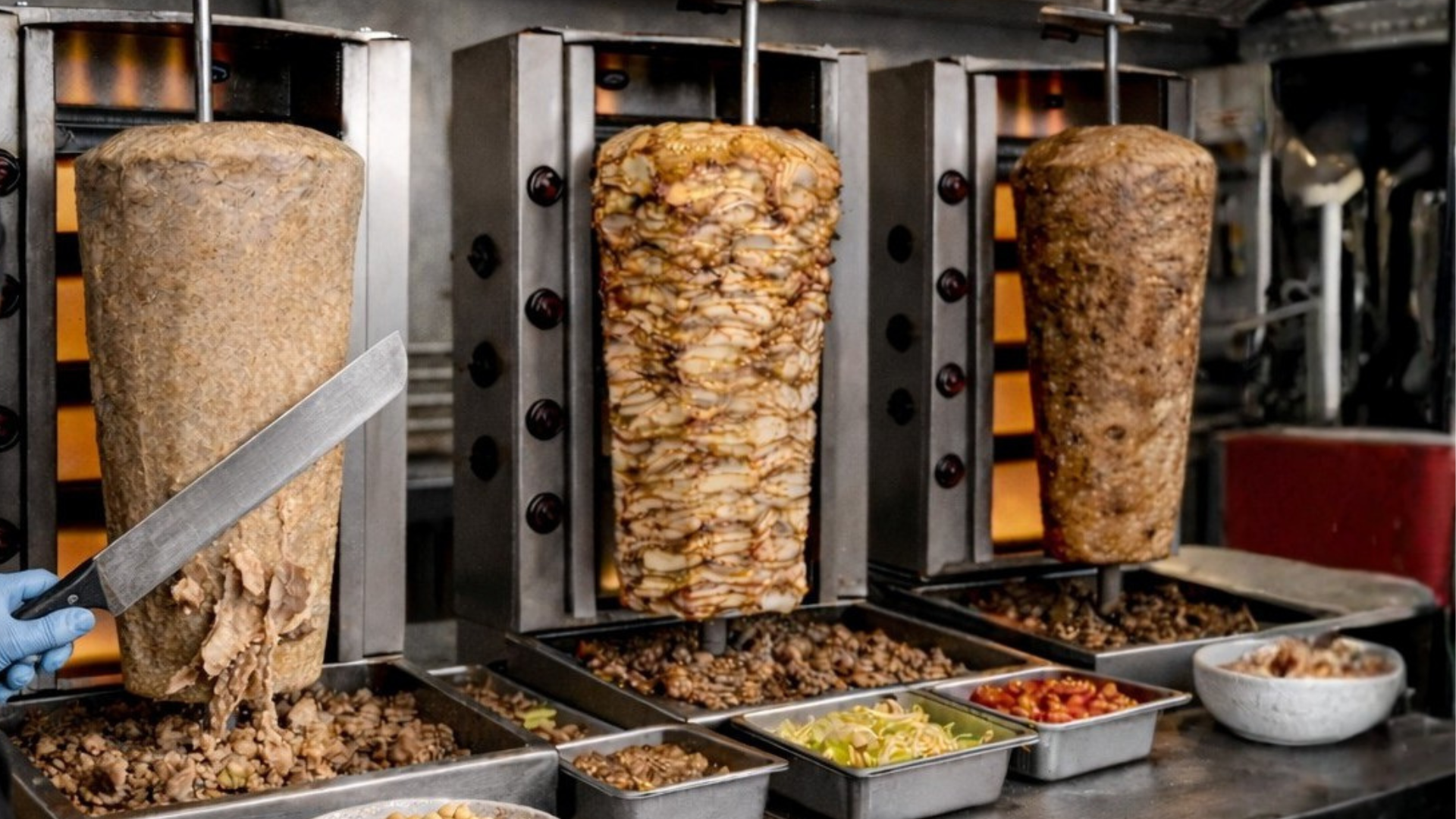
We've been making doner since before it was on every street corner — and that experience shows. Our cones are crafted from whole cut meats, giving you a cleaner product and a better finish on the spit. Whether you need classic doner, slow-marinated shawarma, or authentic gyros, we've got a format that fits your menu. Doner • Shawarma • Gyros Three Names One Tradition

Same Spit, Different Flavours | Three Names, One Tradition

  • Doner Kebab: This is the “father” to all others. It’s traditionally served with beef or lamb and often with tzatziki or other spicy sauces in a flatbread. Its Turkish invention, which was formalized in the Ottoman era. The word “doner” means rotating.
  •  Shawarma (World/Levante): It’s a Middle Eastern dish that was influenced by Ottoman food and has been adapted to regional tastes and accompaniments. Contains spices such as cardamom and cinnamon. Usually served with pickles and tahini (garlic sauce). 
  • Gyros: Gyros is a Greek interpretation of roasted meat, using Greek seasonings and similar roasting techniques. The core concept and process remain the same, even though preparation details may vary, such as spices, sauces, and breads types.

• Preparation: Seasoned minced meat, shaped and layered into a compact form
• Shape: Cylindrical cone formed around a vertical spit
• Cooking Style: Slow-roasted on a vertical rotisserie
• Tradition: One of the earliest rotisserie meat styles, forming the base of shawarma and gyros
• Serving Style: Thinly sliced and served in flatbread or plated meals

Shawarma

• Preparation: Marinated whole cuts of meat stacked in layers
• Shape: Tall, layered cone built on a vertical rotisserie
• Cooking Style: Gradual roasting with outer layers shaved thin
• Tradition: Middle Eastern street food adapted from Ottoman rotisserie methods
• Serving Style: Wrapped with pickles, garlic sauce, or tahini

• Preparation: Seasoned meat stacked and compressed into a firm structure
• Shape: Vertical rotisserie cone with tightly packed layers
• Cooking Style: Slow-roasted and sliced thin as it cooks
• Tradition: Greek interpretation of traditional rotisserie meat
• Serving Style: Served in pita with tzatziki, tomatoes, and onions

Scroll to Top